Who this is for: Non-profit museums and heritage institutions in Sub-Saharan Africa or the European Union that want to run an exhibition or public engagement project with partners. Individuals can’t apply on their own, but curators, educators and artists can take part through an institution’s consortium.
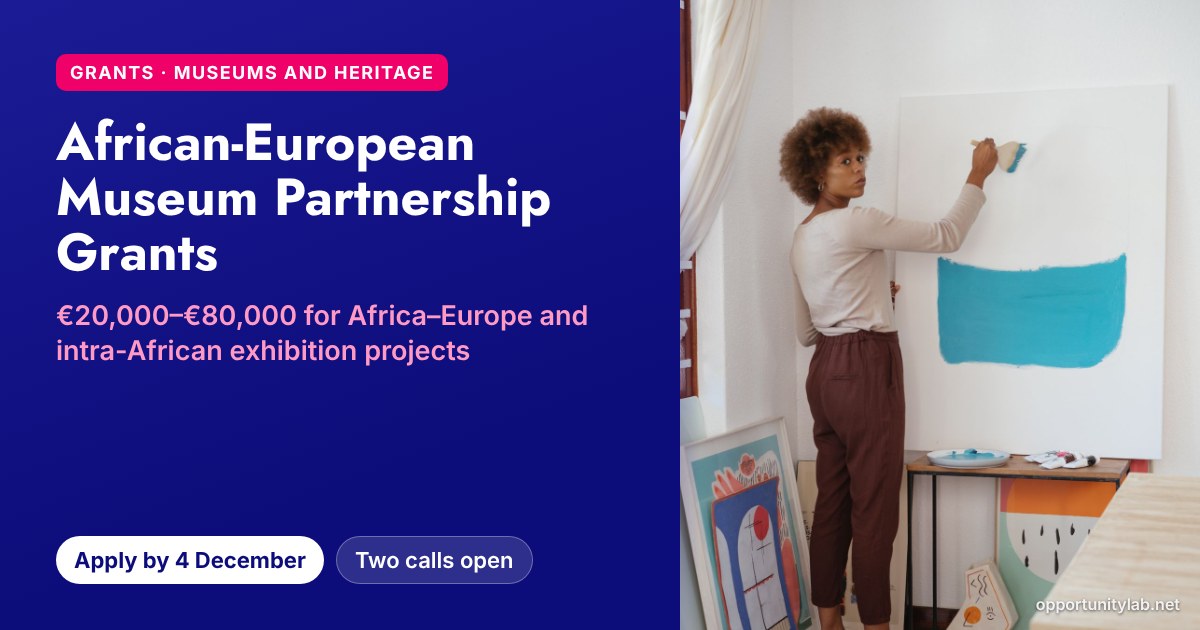
The African-European Museum Partnership is a five-year, €19.9 million initiative funded by the European Union, with contributions from Belgium, France, Germany and the Netherlands, and run by Expertise France and the Goethe-Institut in partnership with the African Union Commission. It grew out of the 2023 Dakar Declaration signed by African and European museum directors. Two of its calls for proposals are open now:
- Sustainable and Innovative Exhibitions: grants of €20,000 to €80,000 for pilot exhibition projects (details below).
- Mediation and Public Engagement: pilot projects in museum mediation, cultural education and public participation, focused on young people, women, local communities and diaspora audiences.
Deadline for both: 4 December 2026, 11:59 pm Paris time (also 11:59 pm in Lagos).
At a Glance
| Funders | European Union, with Belgium, France, Germany and the Netherlands |
| Run by | Expertise France and the Goethe-Institut |
| Grant size | €20,000 to €80,000 (exhibitions call); about 8 projects funded from €500,000 |
| Co-funding | At least 10% of the budget from your own or other non-EU sources, in cash or in kind |
| Duration | Up to 24 months |
| Who can apply | Consortia of non-profit museums and heritage institutions in Sub-Saharan Africa and the EU |
| Languages | English, French or Portuguese |
| Deadline | 4 December 2026, 11:59 pm Paris time |
Call 1: Sustainable and Innovative Exhibitions
This call funds pilot exhibitions that test, document and share sustainable, innovative and inclusive ways of making exhibitions, through co-curation, audience-centred, hybrid or digital formats, and affordable touring. Projects can cover the whole process, from research to dissemination, or just one or two stages, especially for smaller grants.
Themes include new Africa–Europe narratives, migration and intercultural history, tangible and intangible heritage, scenography and design, digital tools suited to local contexts, youth and school engagement, community and diaspora participation, accessibility, and eco-design.
What it can pay for:
- Research, diagnostic studies and co-design ahead of an exhibition.
- Curating and producing permanent, temporary or hybrid exhibitions, physical or digital.
- Scenography, interpretation, translation, outreach and museum education.
- Training linked to the exhibition, and exchanges between consortia.
- Guides, protocols and lessons learned from the project; intra-African touring of exhibitions or objects.
Not funded: mainly construction or renovation, equipment without a clear exhibition project, one-off events, individual travel or conferences, purely academic research, political or religious projects, and commercial projects.
Call 2: Mediation and Public Engagement
This call supports pilot projects in museum mediation, cultural education and public participation, with a focus on young people, women, local communities and diaspora audiences. It is open to the same kind of African and European museum partnerships and has the same deadline. Its full rules and grant amounts aren’t posted on its application page yet. Check the call page or ask at the webinars before you budget.
Eligibility
These rules come from the Sustainable and Innovative Exhibitions call. The lead applicant must be:
- A public or private non-profit museum, or a similar heritage or cultural institution with a clear museum function.
- A legal entity based in Sub-Saharan Africa or one of the 27 EU countries, registered for at least 3 years.
- Able to manage the grant financially, with a bank account that can receive international transfers.
- Running the project on a non-profit basis.
The consortium must:
- Have at least two members that meet the same rules as the lead.
- Include at least one museum or heritage institution in Sub-Saharan Africa: either one African and one European museum, or two African museums. All-European consortia aren’t eligible.
- Show, for European members, an existing or developing partnership with African institutions (a signed letter of intent or memorandum of understanding is enough).
- Optionally add associated partners: NGOs, schools, universities, artists’ organisations and others.
Each organisation can submit only one application to this call, but may also apply to the partnership’s other calls.
How Applications Are Scored
- Relevance and design (50 points): fit with the call, local needs, target groups and a coherent, feasible plan. Only projects scoring at least 30 go forward.
- Impact, inclusion and partnership (20): a balanced consortium, reach to young people, women and people with disabilities, community participation, and new Africa–Europe narratives.
- Sustainability and replication (15): lasting results and a real plan to share methods with other museums.
- Budget and value for money (15).
Sustainability is assessed in practical terms: reusing materials, modular displays, local sourcing, and community involvement in making the exhibition.
Budget Rules
- The grant covers up to 90% of eligible costs; your consortium covers at least 10%.
- Indirect costs up to 7% of direct costs, and a contingency of up to 5%.
- Budgets over €40,000 must include the cost of an external financial audit.
- No land or building purchases, debts, or salaries of national government staff.
How to Apply
- Open the call page on Expertise France’s POPS platform: Sustainable and Innovative Exhibitions or Mediation and Public Engagement.
- Download the call documents. You can do this without an account by giving your organisation’s name and an email address.
- Complete the grant application form, budget (Excel), logical framework, financial and organisational capacity form, and sworn statement. Add a project presentation and an implementation schedule.
- Create a free POPS account and submit everything online before 11:59 pm Paris time on 4 December. Applications by email aren’t accepted.
- Questions go to [email protected], quoting the call name: by 26 November for exhibitions and 20 November for mediation. Answers are published on the call page for everyone.
Info webinars: 10 November 2026 at 11:00 CET (also 11:00 in Lagos) and 20 November. Register on Zoom. More about the programme: Expertise France project page.
Tips
- Find your partner now. A signed letter of intent between institutions takes time; start this week.
- Score the 50 points first. The first stage judges relevance and design; a project that misses 30 points isn’t read further.
- Show reuse and local sourcing. Concrete plans for materials, modular displays and local fabrication count.
- Budget the 10%. Staff time and venue space can count as in-kind co-funding if documented.
- Plan to share. A guide or toolkit from your project scores under replication.
Related Opportunities
- Open Arts Fund 2026: Grants for Artists Working on Northern Nigeria
- Humboldt Residency Programme 2027 in Berlin
- Arewa Creative Writing and Advocacy Fellowship 2026
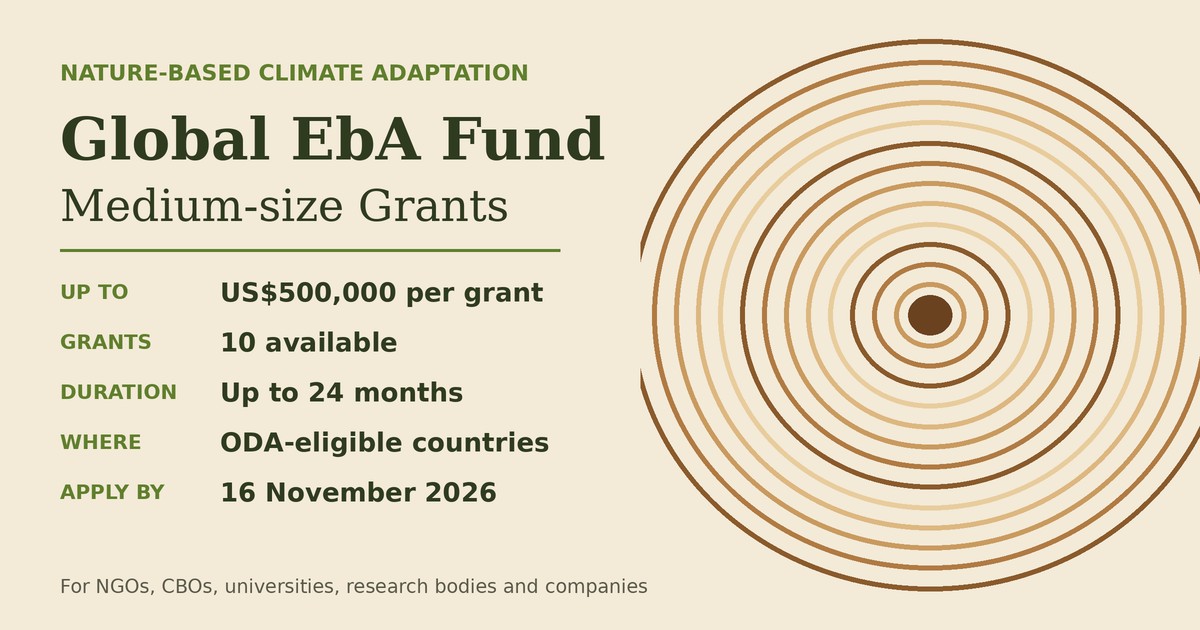
- Global EbA Fund Medium-size Grants 2026
Run an organisation? Set it up on the OpportunityLab Portal to see every grant it can apply for.