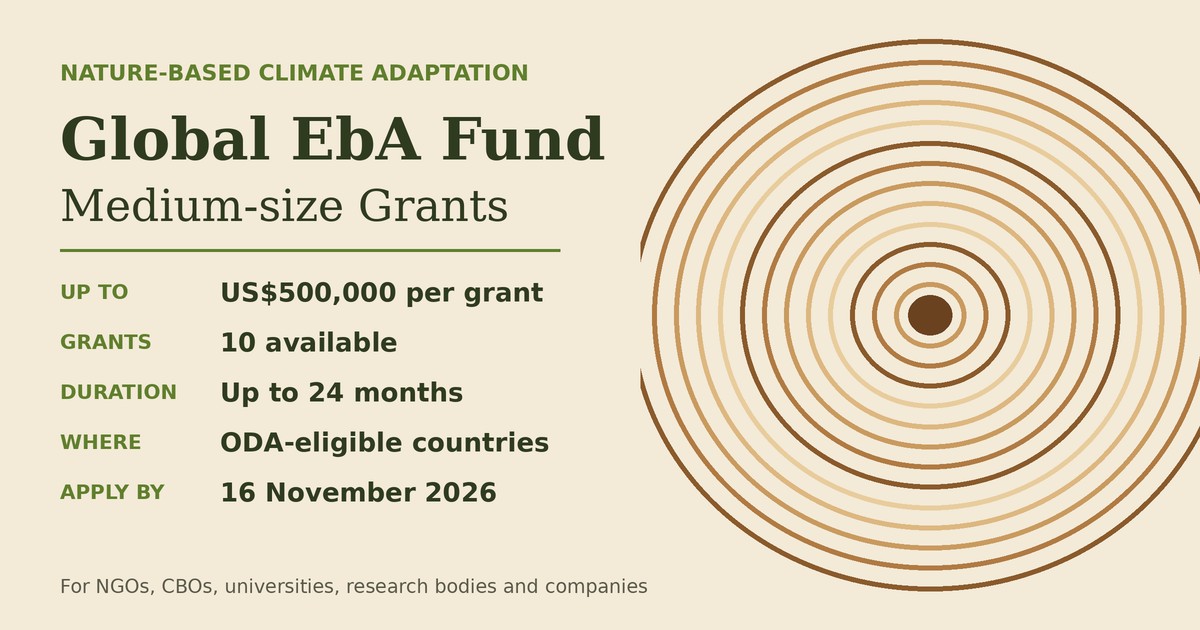


The Global Ecosystem-based Adaptation (EbA) Fund has opened its Medium-size Grants call, offering 10 grants of up to US$500,000 each for projects lasting up to 24 months. The money supports projects that use nature, such as healthy forests, wetlands, mangroves and grasslands, to help communities adapt to climate change. The Fund wants projects that scale up this approach and build it into national climate and development plans.
The Fund is backed by Germany’s International Climate Initiative (IKI), and applications go through IUCN’s grants portal. It’s open to organisations working in ODA-eligible countries, which include Nigeria, Kenya, Ghana and almost every other African country.
Deadline: 16 November 2026. The portal has been accepting submissions since 12 October.
Who it’s for: despite some headlines calling it a fund “for MSMEs”, it’s for organisations: NGOs, community groups, universities, research institutes and private companies, usually working in partnerships. Individuals can’t apply.
At a Glance
| Funder | Global EbA Fund (supported by Germany’s International Climate Initiative, IKI) |
| Grant size | Up to US$500,000 each (10 grants) |
| Project length | Up to 24 months |
| Where | ODA-eligible countries, plus global, thematic or regional projects |
| Who can apply | Legally registered organisations (no individuals, no direct government funding) |
| Submission window | 12 October – 16 November 2026 |
What the Fund Supports
The call is a “Strategic Scaling and Global Influence” track. Proposals should tackle the barriers that stop nature-based adaptation from scaling up, and help build it into national plans such as NAPs, NDCs and biodiversity strategies. The Fund suggests three priority topics, but aligning with them is welcome, not required:
- Innovative finance for EbA: partnerships with businesses, investors and local champions to unlock private and blended finance, and to turn nature-based adaptation into profitable, scalable business models.
- EbA for human development and security: using nature-based adaptation in fragile and conflict-affected areas to protect vulnerable communities, reduce tensions over natural resources and strengthen social cohesion.
- Linking climate, nature and land policies: organisations working with national governments to connect commitments under the UN climate, biodiversity and desertification conventions, and disaster risk reduction, so one investment delivers several results.
Benefits
- A grant of up to US$500,000
- Up to 24 months to deliver the project
- The chance to scale proven local work into national policy and investment
- Links to a global network of nature-based adaptation practitioners and knowledge exchange
Eligibility
Who can apply
- Non-governmental organisations (NGOs) and international NGOs
- Intergovernmental organisations
- Community-based organisations
- Indigenous Peoples’ organisations
- Universities and academic institutions
- Research institutes and think tanks
- Private sector companies, under certain conditions. The Fund won’t pay for for-profit activities, and the public interest comes first.
- Consortia of these organisations, led by one “applicant organisation” that signs the contract
Governments can be consortium partners but can’t receive any funding, directly or through sub-grants.
Project requirements
- The project must qualify as Ecosystem-based Adaptation and clearly name the climate impacts it addresses.
- It must be global, thematic or focused on ODA-eligible countries. In multi-country projects, every country must be ODA-eligible.
- It must build on existing work, not start from scratch.
- It must partner with local institutions and include local communities, Indigenous knowledge and gender perspectives.
- It must show catalytic, innovative potential and a plan to sustain results after the grant ends.
- The budget must be up to US$500,000, and the project 24 months or less.
- The lead applicant must be legally registered and pass the Fund’s due diligence checks.
How Proposals Are Judged
The biggest share of the score, 40%, goes to the project’s EbA approach: how clearly it reduces people’s vulnerability to climate change. Reviewers also look at design and methodology (theory of change, logframe, budget), gender and social inclusion, and how innovative and catalytic the project is. The Fund says it will set an especially high bar for innovation and scalability.
How to Apply
- Download the Call for Proposals and the Grants Procedures Manual from the official page, and read them first.
- Prepare the required documents:
- Applicant Declaration
- Co-applicant Mandate
- Medium-size Grants Application Form
- Theory of Change, Logframe and Project Activities Form
- Project Budget Template
- Due Diligence and Financial Capacity Questionnaire
- Draft everything offline first, as the Fund recommends.
- Submit through the IUCN online application portal before 16 November 2026. Applications sent any other way aren’t accepted.
Official Global EbA Fund Medium-size Grants page · Apply on the IUCN portal
Tips for African Applicants
- Don’t leave it to the last day. With only days left, check that your organisation is already registered on the portal and that all six documents are ready.
- Build on what you’ve done. Show results from earlier nature-based projects, such as mangrove restoration, watershed management or agroforestry, and explain how this grant will scale them up.
- Show a link to government. Partnering with a ministry or state agency, which can’t receive money but can join the consortium, strengthens the policy angle.
- Be specific about climate risk. Name the hazard (flooding, drought, coastal erosion) and the people affected.