
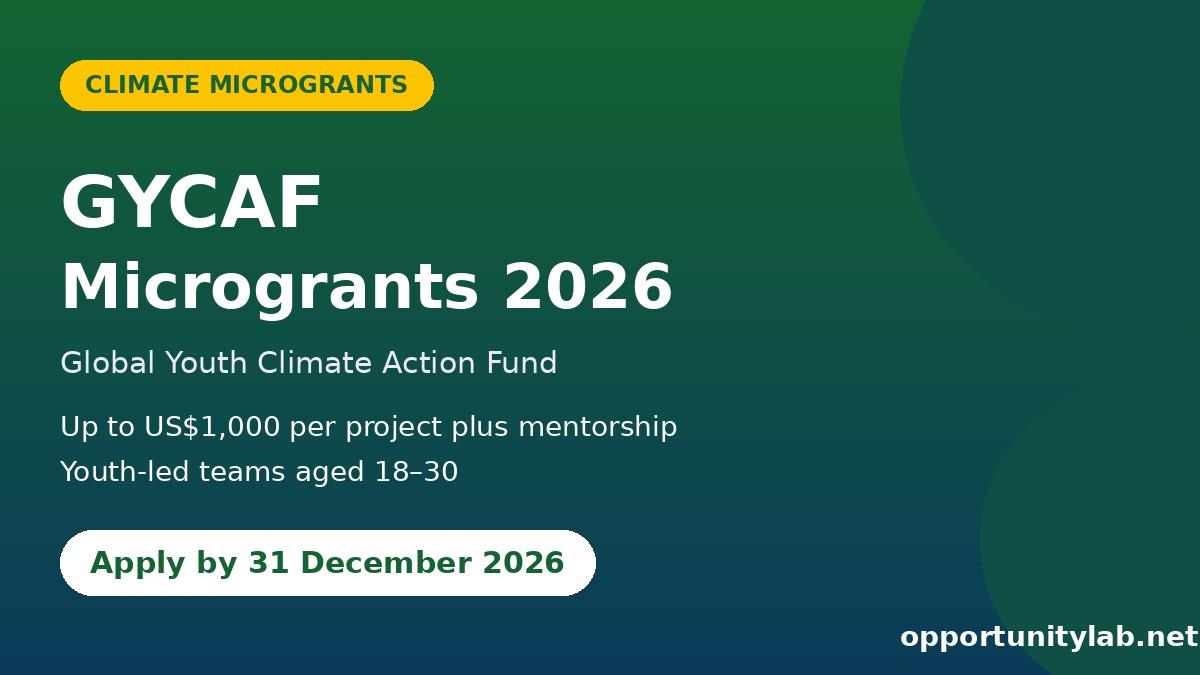
The Global Youth Climate Action Fund (GYCAF) has opened the fourth cycle of its Microgrants for youth-led climate and environmental projects. Between three and five projects will each receive up to US$1,000, and selected grantees can move on to GYCAF’s 12-month mentorship programme.
The call is open to youth-led groups, networks, initiatives and grassroots organisations where at least 80% of the leaders or core team are aged 18–30. Projects led or co-led by women receive special consideration. Deadline: 31 December 2026. The call opened on 14 November 2026.
Key Details
- Funder: Global Youth Climate Action Fund (GYCAF)
- Cycle: 2026 Microgrants (fourth cycle)
- Grant size: up to US$1,000 per project
- Number of grants: 3 to 5 projects
- Age: at least 80% of leadership or core team aged 18–30
- Call window: 14 November – 31 December 2026
- Results: expected in early spring 2027
- Application fee: none mentioned
Benefits
- A grant of up to US$1,000 to launch a new climate project or strengthen an existing one.
- Money can pay for materials, equipment, community activities, training, communications, transport and other project costs.
- Selected grantees can join GYCAF’s 12-month Mentorship Programme, with one or two mentors, monthly one-on-one sessions and a personal plan with three-month milestones.
- Workshops on climate finance, advocacy, grant writing and public speaking, plus a peer network of young climate leaders from more than 18 countries.
- A chance to present at GYCAF’s annual summit, with top projects getting priority for future GYCAF grants.
Focus Areas
- Sustainable agriculture
- Clean energy
- Oceans
- Capacity building
- Nature-based solutions
- Technology and innovation
Eligibility
Applicants must meet all nine points in the official guidelines:
- Be a youth-led organisation, network, initiative or grassroots group with at least 80% of its leadership or core project team aged 18–30.
- Address an identified climate or environmental problem in a community.
- Show meaningful youth leadership in designing and running the project.
- Present a clear, workable plan for using the grant.
- Provide a realistic timeline and budget.
- Show expected environmental and/or social and economic benefits.
- Show strong commitment to lasting change in the target community.
- Explain how the project will create value after the grant period ends.
- Be seeking money to start a new initiative or strengthen an existing youth-led project.
The guidelines do not limit the call to specific countries. GYCAF says its mission is to finance youth-led climate action in communities vulnerable to climate change, so projects from Nigeria and the rest of Africa are a natural fit.
How to Apply
- Read the official 2026 Microgrants guidelines, including the assessment criteria and terms.
- Use the eligibility checker on the guidelines page to confirm your project meets all nine points.
- Prepare your project plan, timeline, budget (up to US$1,000) and expected results.
- Submit through the official GYCAF application form linked from the guidelines page before 31 December 2026.
Tips
- Projects are scored on impact and relevance, feasibility, youth and community leadership, sustainability, measurability and value for money. Address each one directly.
- Keep the budget tight and realistic. A small tree-nursery, solar drying, waste-to-compost or mangrove project with clear numbers (trees planted, farmers trained, kilos of waste diverted) is easier to judge than a vague awareness campaign.
- Show how the community helped shape the project, for example through meetings with farmers, women’s groups or local leaders.
- If your team is women-led, say so clearly and explain how the project tackles barriers women face.
- Explain what happens after the grant, such as a small fee-based service or a partnership with a local council.
- Submit before Christmas to avoid end-of-year network and power problems.