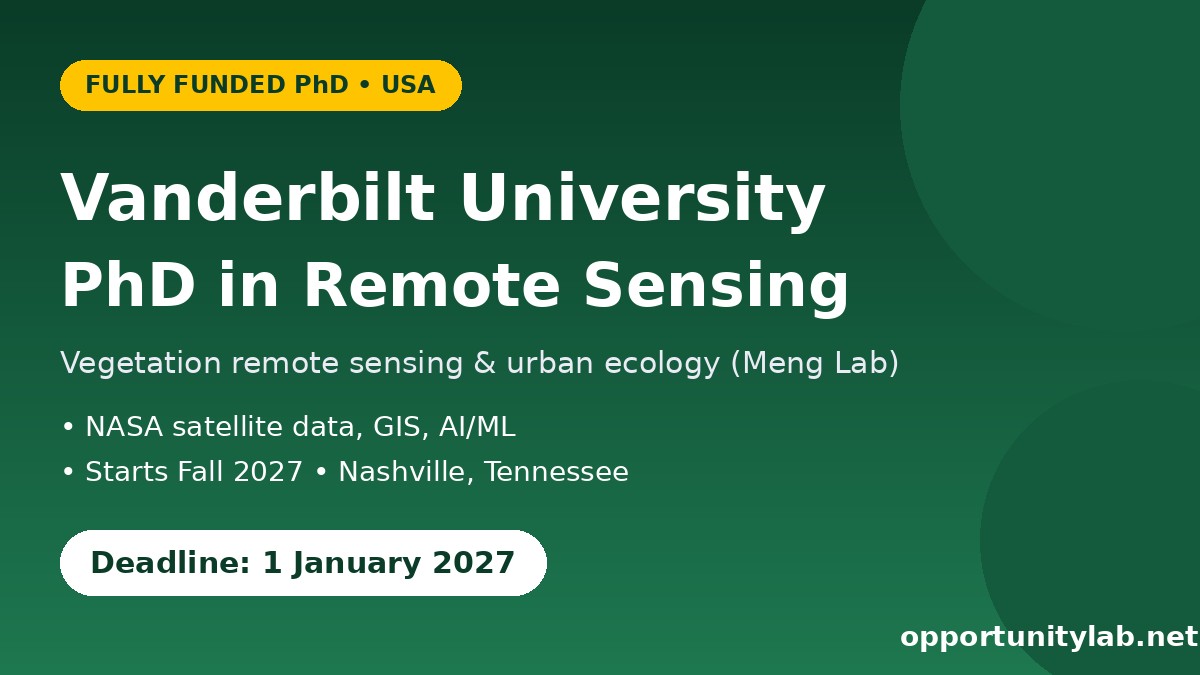
The Meng Lab in the Department of Earth and Environmental Sciences (EES) at Vanderbilt University in Nashville, USA, is recruiting one fully funded PhD student to start in Fall 2027. The research uses NASA satellite data, geospatial analysis and AI/machine learning to study how urban warming, light pollution and air pollution affect vegetation, ecosystems and human health. The department’s application deadline is 1 January 2027.
The lab encourages applications from diverse candidates, especially from under-represented groups, and the post suits African graduates with a remote sensing, GIS, ecology or data science background.
Key Details
- University: Vanderbilt University, Nashville, Tennessee, USA
- Department: Earth and Environmental Sciences
- Lab: Meng Lab (PI: Dr Lin Meng)
- Position: 1 fully funded PhD (no stand-alone master’s)
- Start: Fall 2027
- Deadline: 1 January 2027 (EES graduate application)
Research Areas
- vegetation remote sensing with NASA satellite observations
- urban ecology and ecosystem processes
- urban warming and heat
- artificial light pollution and its effects on plants
- air pollution and vegetation health
- AI and machine learning for big environmental datasets
- links between vegetation, environmental exposure and human health
The exact PhD topic is shaped together by Dr Meng and the student.
Benefits
- a fully funded PhD at a top US research university
- hands-on work with NASA satellite data, GIS and AI/ML tools
- close mentoring and career development
- opportunities to publish high-impact research
The announcement doesn’t list the stipend amount. Vanderbilt PhD funding normally includes tuition and a stipend, but confirm details with Dr Meng or the department.
Eligibility
- strong quantitative and programming skills (for example Python, R or Google Earth Engine)
- a solid background in urban ecology, vegetation remote sensing and land surface processes
- proficiency in spoken and written English
- meeting the EES department’s graduate admission requirements
International applicants should check the department’s requirements for English tests and visas.
How to Apply
- Email Dr Lin Meng at [email protected] with your CV, research interests and career goals.
- Read the lab’s recent publications so your email can show how your interests fit.
- Check the EES admission requirements (linked from the Meng Lab Join page).
- Submit your formal application to Vanderbilt EES by 1 January 2027.
Tips
- Contact Dr Meng early — well before the January deadline.
- Mention specific satellite products or methods you’ve used (Landsat, Sentinel, MODIS, VIIRS night lights).
- Share a short code sample or GitHub link if you have one.
- If you’ve studied urban heat or air quality in an African city, highlight it.
Related Opportunities
- NTU Nanyang Business School PhD Scholarship 2027 (Singapore)
- Funded PhD and Postdoc at UPF Barcelona 2027
- FBIS Africa Small Grants 2026
Deadline: 1 January 2027.