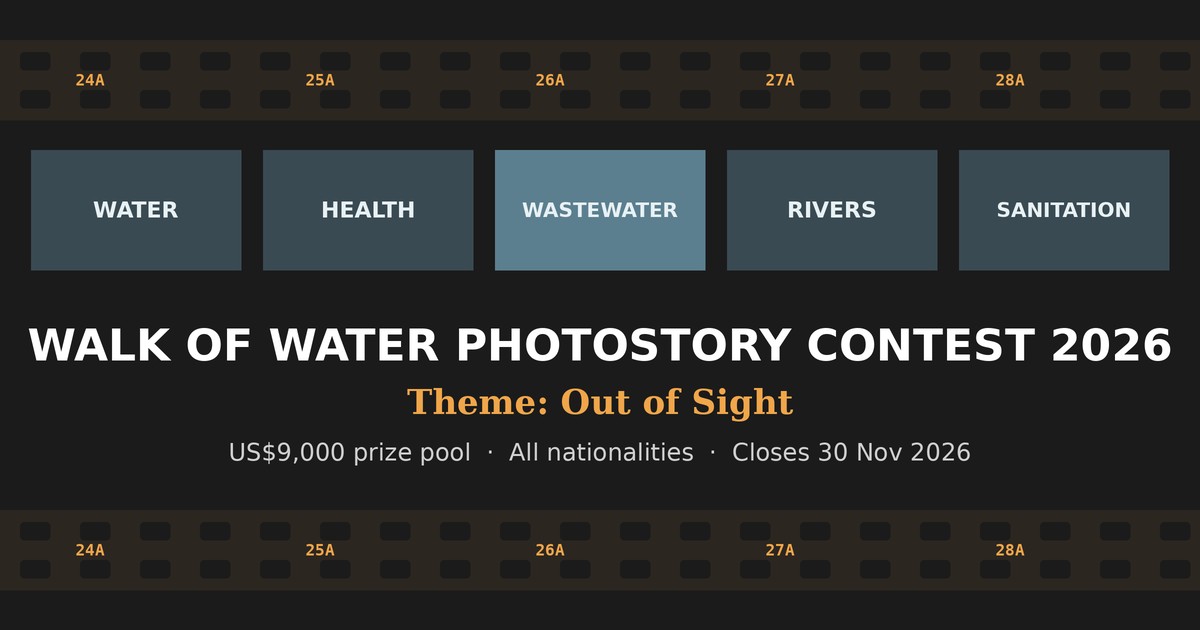



Onewater is running the sixth Walk of Water Photostory Contest, themed “Out of Sight”, with UNESCO’s World Water Assessment Programme, the UN Environment Programme (UNEP) and other partners. Photographers can win a share of US$9,000 for photo stories about water and health, with the main prizes going to stories about wastewater, the part of the water cycle almost nobody photographs.
The contest is open to photographers of all ages and nationalities, including Africans, and it’s free to enter. Entries close on 30 November 2026 at 23:59 CET, which is 23:59 in Lagos, 00:59 on 1 December in Johannesburg and Cairo, and 01:59 in Nairobi.
At a Glance
| Organisers | Onewater, with UNESCO WWAP, UNEP and partners |
| Theme | “Out of Sight”: water, health and wastewater |
| Total prizes | US$9,000 (Global and Youth awards) |
| Who can enter | Individuals and organisations of all ages and nationalities |
| Entry fee | None listed |
| Deadline | 30 November 2026, 23:59 CET |
| Results | January 2027 |
What Stories They Want
The main focus is the hidden life of wastewater: dignified toilets, clean rivers, the damage untreated sewage does, and the people who test wastewater to spot disease outbreaks early. But any story about water and health can be selected, exhibited and published. Strong stories might:
- show solutions in wastewater management, such as nature-based treatment or turning wastewater into water, energy or nutrients
- explore how clean rivers, lakes, wetlands and coasts support public health and livelihoods
- show wastewater surveillance in action, from sampling to lab analysis to public-health response
- expose the hidden cost of polluted water, including disease outbreaks linked to poor sanitation
- celebrate the cultural, spiritual and mental-health value of water
- document safe drinking water, sanitation and hygiene in homes, schools, clinics and workplaces
- spotlight sport and active living in and around water
Benefits
Global Wastewater Award (US$6,900)
- 1st prize: US$3,000
- 2nd prize: US$2,000
- 3rd prize: US$1,000
- 3 merit awards: US$300 each
Youth Wastewater Award (US$2,100), for photographers aged 25 or under on 1 December 2026
- 1st prize: US$900
- 2nd prize: US$750
- 3rd prize: US$250
- 3 merit awards: US$200 each
All winners are featured on the Onewater website. The strongest stories, about wastewater or not, will also be shown in the 2027 Walk of Water exhibitions and published with Onewater’s media partners worldwide.
Eligibility
- Open to individuals and organisations of all ages and nationalities.
- Entrants under 18 need a parent or guardian to co-sign the photo licence.
- Up to three photo stories per person, and no more than one prize per person.
- Photos must be your own work. AI-generated or AI-altered images are disqualified; normal edits such as exposure, colour and cropping are allowed.
- Employees of the organisers and sponsors, jury members and their immediate families can’t win prizes.
How to Apply
- Prepare 5 to 10 photographs that tell one story, as .jpg files of at least 10 megapixels (long side 3,872 pixels or more).
- Write the story behind the photos, between 2,500 and 8,000 characters.
- Write a short, numbered caption for each photo (30 to 300 characters).
- Sign the photo licence. You keep your copyright, but the organisers can use your work to promote the contest and their water work, always with credit.
- Submit through the official contest page before 30 November 2026, 23:59 CET.
Official Walk of Water Photostory Contest page (Onewater)
Questions: [email protected]
Note: some listings give 20 November as the deadline. Onewater’s official page says 30 November 2026, so that’s the date we use here.
Tips for African Photographers
- Tell a story close to home. Open drains, flooded latrines, a community borehole or a river clean-up in your city can all make powerful entries.
- Ask for consent. Get permission from the people you photograph, and don’t show children’s faces without a parent’s written consent.
- Write well. Judges score the writing as well as the photos, so explain who, what, where and why it matters.
- If you’re 25 or under, you’re also eligible for the Youth award.